Sunday 15 June 2025
What an honour to have enjoyed a week’s residency in the Whitlam Prime Ministerial Home! I’ve felt the weight of the day-to-day rise from my shoulders, lift my gaze and expand my thinking; I’ve spent good time listening to Gough and Margaret; I’ve finished my next book and sent it to three critical readers for feedback. With thanks to the Whitlam Institute, I’ll meet the publisher’s 1 July manuscript deadline with a book greatly enriched by this special experience.
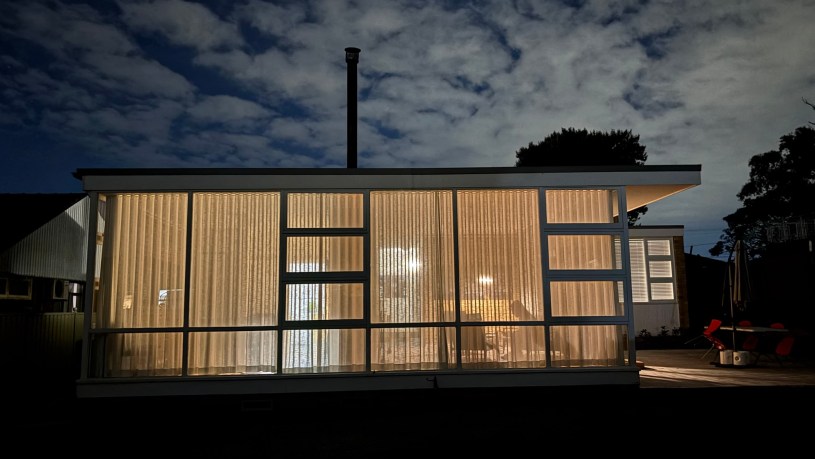
Writing in this house came so naturally – it took no time at all to feel at home. The light, the elegant design, the happy kitchen. Whether I sat at the master bedroom desk, the dining table or stretched out on the lounge, ideas sparked and words flowed. The neighbour’s rooster kindly got my every day started nice and early, while visiting ibis offered their characteristic comic relief! And as someone whose culture prizes hospitality, I took pride in returning the house’s care by cooking and cleaning in fine spirits.
Twice I facetimed with my parents: they live in Greece but spent nearly fifty years in Sydney. I knew just how excited they’d be to get to visit the home of two of their heroes. Even with little English, they appreciated and deeply admired Gough’s integrity, the way he championed Australia’s migrant strengths, and his unceasing determination towards equality and land rights for Aboriginal and Torres Strait Islander people – the people who, against relentless Australian racism, had extended my parents their warmest welcome and became their first friends. Equally they admired Margaret and loved seeing her speak with such confidence and ease, normalising an effortless feminism. Having seen democracy in their homeland fall to a military dictatorship in 1967, they were astonished to see that a coup could oust an Australian prime minister in the very same year a peoples’ uprising had restored democracy in Greece. My parents always remained what many years later I would hear described by cultural diversity scholars as “Wogs for Whitlam”. Love it.
On my second-last day, I knew I needed to hear Gough and Margaret’s voices fill their home. I played speech after speech on that superb little Bose speaker as I went about tweaking my manuscript and caring for their home. From now, as I remember my week there, I will always feel their presence.
Writers constantly seek the space and time to devote to our practice without interruption, without distraction, without having to prioritise the minutiæ that constrain our thinking. Opening the Whitlam Prime Ministerial Home for creative residencies is a valuable way to extend the eternal Whitlam vision to new generations of its beneficiaries.
I am so grateful to John for looking after me with such generosity. Given my deep knowledge of the Whitlam legacy, I’m afraid I indulged far too much in John’s time as he told me those fun stories of the house’s electorate visitors, recreated lino and door handles, the memories held by the Hills Hoist – and all on a Sunday! We’re all better for John’s kindness, expertise and passion, this anniversary year in particular as we remind Australia that it’s still very much time.
When Australia Became a Republic is out on 1 October as part of the Monash University Publishing ‘In the National Interest’ series. I’ll be discussing it at several forums this year, including the Canberra Writers Festival on 24-26 October where I will acknowledge the generosity of the Whitlam Institute with great joy. I am so grateful for this wonderful opportunity.
First published in the Whitlam Institute newsletter
 ESTHER ANATOLITIS