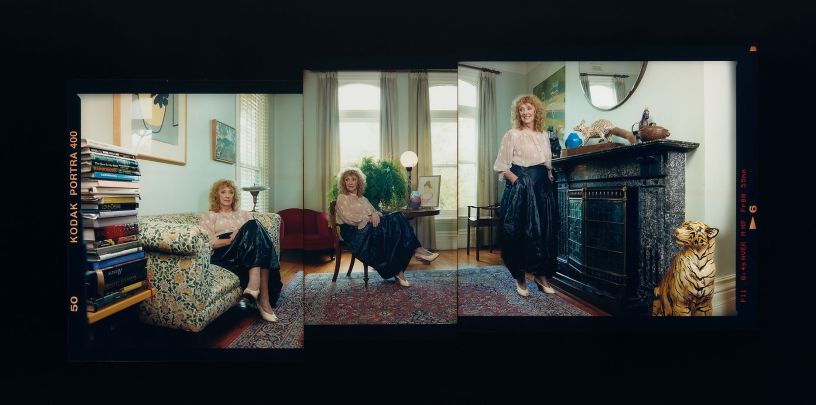
Nobody ever said ‘no’ to Maudie Palmer.
Not because she was formidable – although she most certainly was. Nor because she was daunting – she was a famously adventurous and energising thinker.
It didn’t matter if you were a board chair, philanthropist or investor, nor indeed the mayor, arts minister, premier or prime minister: you didn’t say ‘no’ to Maudie because she had long since earned the deep admiration and absolute trust of everyone who ever knew her.
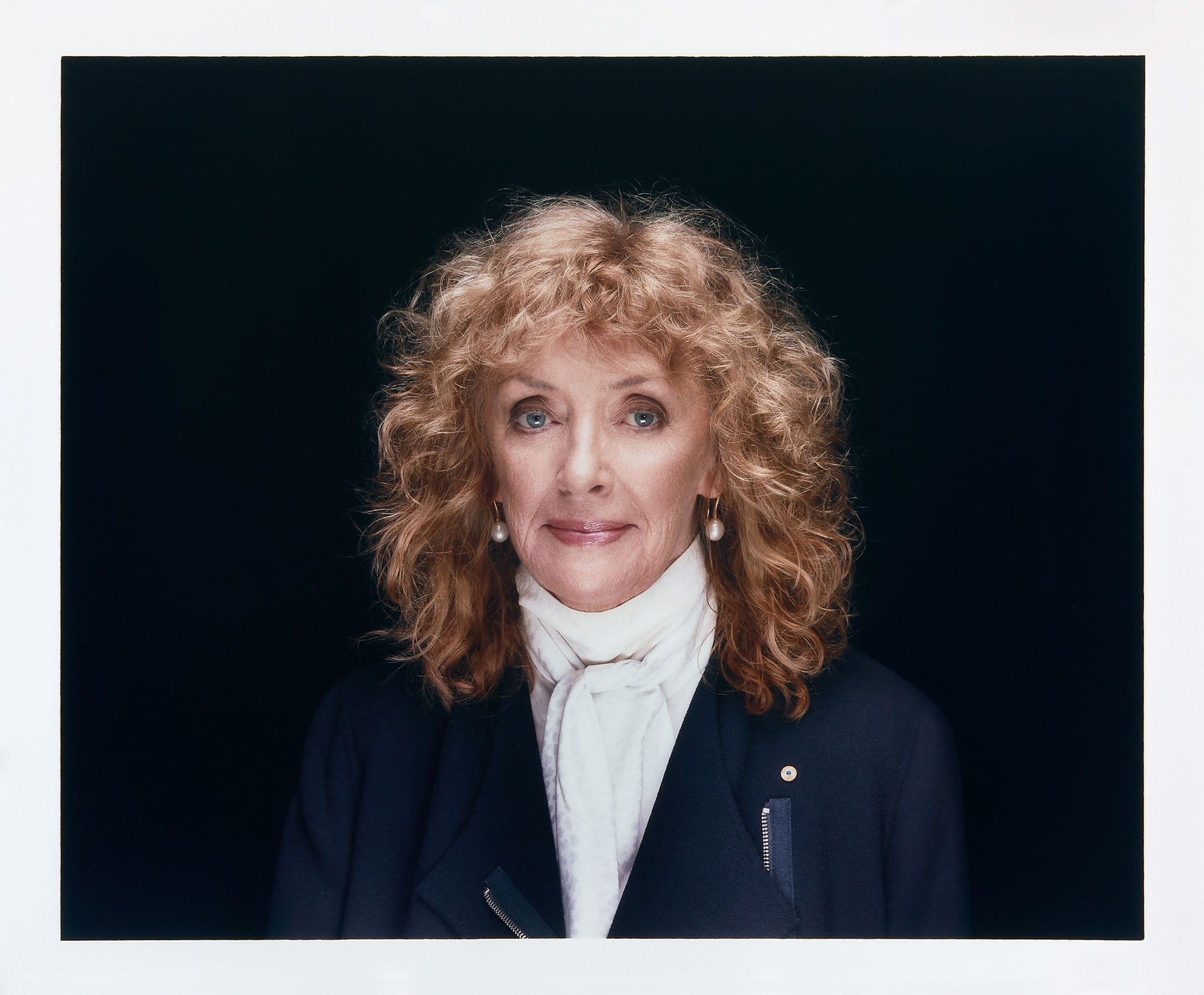
A titan of Australian contemporary art, Dr Maudie Palmer AO died unexpectedly at home in Melbourne on 3 December.
Maudie’s vision inspires us to overcome doubt and negativity and strive to be more. To honour First Peoples. To do everything we possibly can to safeguard the environment. To extend artistic practice beyond the limits of our imagination.
As one of the finest advocates for the power of the artist that Australia has ever known, Maudie’s word was transformative: championing artists was her ethos and her calling. For Maudie, this went beyond vocation, beyond profession. She was dedicated to ensuring that Australia’s future was informed by artistic perspectives, and she was committed to honouring First Nations sovereignty and the wisdom of Elders.
For Maudie, this ethos was ecological as well as cultural: “In the immediate future, we all need to urgently look after this land. We need to use our passion and creativity to bring it back from what is surely the brink of destruction. We need to listen to our First Nations people. We need to listen to the scientists.”
Mourning and celebrating Maudie are the many institutions she inspired and transformed: as founding director of Heide Park and Art Gallery (now Heide Museum of Modern Art), TarraWarra Museum of Art and Herring Island Environmental Sculpture Park; as initiator of the collaborative Birrarung Project spanning Art Water Refuge, her poetic film Birrarung, the Bulleen Birrarung Cultural Precinct project, Birrarung Valley Walk and the future Birrarung Cultural Pathway; as a Trustee of the National Gallery of Victoria, a founding Ambassador of CLIMARTE, and on countless boards and advisories, including her guidance of InPlace; and as a former curator, director or strategic advisor at the University Gallery (now the Potter Museum of Art), Melbourne International Arts Festival, New Commonwealth Law Courts, AAMI Stadium, Barak Bridge, Moët and Chandon Australian Art Foundation, St Arnaud Street Museum, Art Gallery of Ballarat, Gosford Regional Gallery, Hamilton Art Gallery, McClelland Gallery and Sculpture Park, Shepparton Art Museum, Toowoomba Regional Art Gallery, Warrnambool Art Gallery, Yarra Valley Artists in Residence Program and so many more. In recognition of her profound achievements and generosity, in 2006 she was made an Officer of the Order of Australia.
Across her every involvement, Maudie positioned art-making as central to nation-building and uppermost in political priorities. She was a sophisticated architectural advisor, having overseen major cultural infrastructure projects and daring new builds at Heide and TarraWarra, guiding our experience of artists’ work in spaces designed for that purpose. She tirelessly advanced the right of artists – and indeed, of all of us – to shape the civic realm and guide the decisions that shape our lives. Her work protected artists from the vicissitudes of politics while forever championing their voice.
In her 2022 Monash University graduation address – at which she was awarded an honorary doctorate, and from which I quote above – Maudie focused on the transformative power of creativity. She challenged students “to formulate a vision, to set one’s sights on how to achieve that vision, and to be relentless about its advocacy.” Importantly, she also emphasised the invaluable role of the relationships we foster: “The priority in my working life has been to bring artists together with the community. This bringing together has been an underlying factor in all my projects.”
In doing so, Maudie transformed the world around her. To be in her world was to feel recognised, understood and exhilarated. Countless artists owe their careers to Maudie’s careful nurturing. Private collectors owe their art knowledge and their direct relationships with artists to Maudie’s keen eye. Galleries across the continent owe their origins and their continued success to Maudie’s expert foresight and advice. Australia’s contemporary arts scene owes its leading institutions to her vision.
Just like John and Sunday Reed, whose home near Heidelberg went on to become today’s Heide under her inaugural direction, Maudie readily opened her home to artists. Surrounded by artworks, with books piled high in every available space, Maudie’s home was the most welcoming space I knew.
Maudie and I were very close. Our relationship went beyond collegiality, beyond friendship and beyond family. I know I’m not alone in this: Maudie was dedicated to so many of us, with an endless capacity for insight and care. I loved seeing her entire body take on an even greater elegance when she spoke with deep affection and admiration of her daughters and her grandchildren. I loved seeing that forthright posture when she spoke of artists and colleagues whose practice she was mentoring, and when reflecting with delight on the evolution of that practice decades later. I loved hearing her exhort a politician to find that inner courage and take decisive action for the greater good.
An advisor works strategically and with quiet integrity. A curator deliberates, reflects and facilitates. A director sets a bold vision and leads with clarity. Maudie was all of this: she set the standard. Tall, stylish, with piercing blue eyes and a devastating intelligence, Maudie raised the bar and then she raised it higher. She explored and she critiqued, she questioned and she encouraged, she challenged with all her muscle and she loved with all her heart.
It was Maudie’s wish that there be no public funeral, and her family have asked that we respect their privacy.
To honour Maudie’s legacy, articulate your vision and say ‘yes’ to your greatest ambitions. Understand the power of your voice to create change. Act now to stop ecological disaster. Support the artists who create our future. And love with your every fibre and nerve.
An edited, abridged version was published by The Age in print on Friday 12 December with the headline ‘Titan leaves a legacy of advocacy’. An edited version was published by The Age online the day before with the headline ‘Nobody ever said ‘no’ to Maudie Palmer. The world is better for it’. Maudie’s family have issued a statement of thanks for everyone’s kind wishes, and provided a postal address for any messages of sympathy, as well as a list of organisations to which we might like to donate in lieu of sending flowers.
Header: Maudie Palmer AO No.2 2022 (In The Good Room, Glendale)
Printed 2023
C- type hand print, Kodak Endura Premier matte paper
Image size: I49cm x 68cm
Paper size: 170cm x 76cm, edition of 8 + 2 AP
Artworks featured: Patrick Caulfield, James Morrison, Linda Marrinon, John Scurry, Danie Mellor
Portrait: Maudie Palmer AO No.1 2022
Printed 2023
C-type hand print, Kodak Endura Premier matte paper
65cm x 80cm, edition of 8 + 2 AP
 ESTHER ANATOLITIS